My Great Grandfather, Louis Rogers, one of the founders of Rogers Brothers

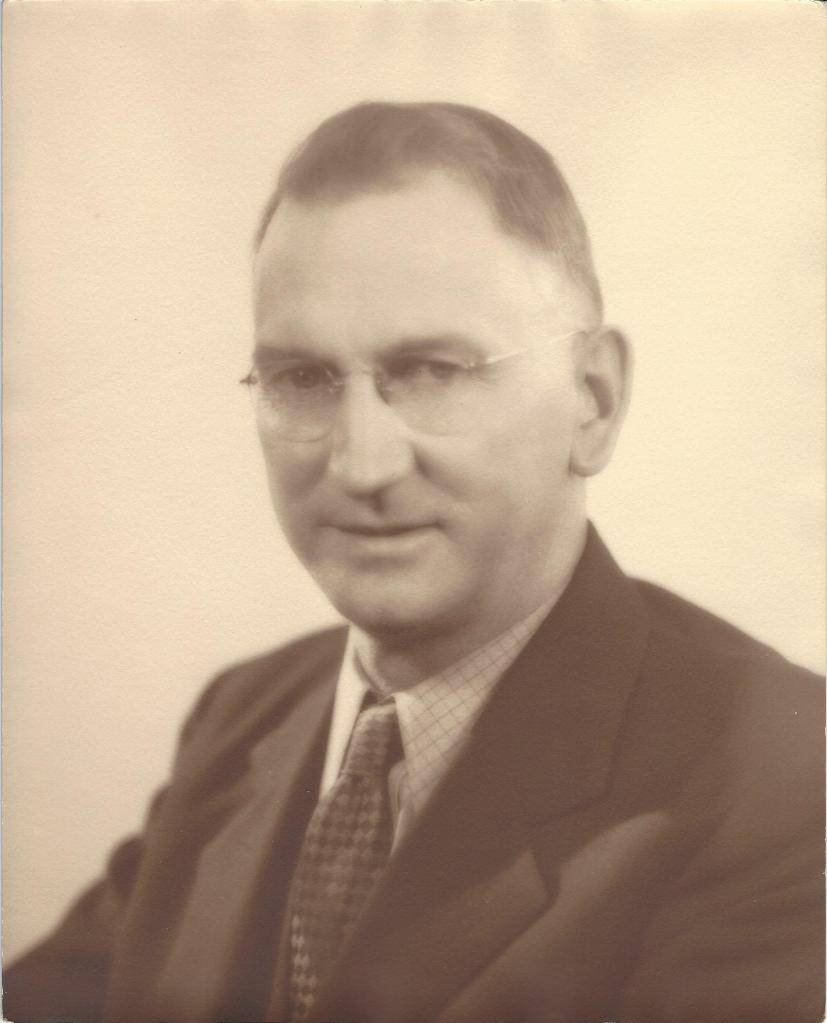
Louis J Rogers

Born October 3, 1880 in Titusville, PA and died September 6, 1958 in Albion, Erie Co PA. He married Margaret Margarita Ward January 24, 1911 in Oil City PA.

An interesting fact here is that my brother, Stephen Roger Lillie was born the same day in Conneaut, Ohio. It is said that they did not share the news with the parents of the child (my Mother and Father) thinking it would upset them. They found out at a later date that this tragedy occurred. There is much to discuss about this auspicious event, but at a later time.

Notes from cousin Roxie:

The roots of this company extend from Albion to the nearby small town of Pageville, where in the 1890’s, the three Rogers brothers grew to manhood on their fathers’s farm. Their invaluable experience gained on the farm was considerably enhance by the fact that their father also owned a saw mill and this gave them an opportunity to become familiar with and to operate various types of machinery.

In 1904, through contacts established in the course of their lumbering activities, the two older brothers, Charles and Louis (my Great Grandfather), became associated with the Kellogg Brothers Iron Works, Buffalo, NY and were engaged to sell bridges in Western Pennsylvania. The younger brother, Hugh, was hired by the company to construct the concrete abutment work and to supervise the construction of the steel super-structure.

In 1905, the brothers decided to go into business for themselves and built their own small factory in Albion just north of the mill which is now owned by Willard Johnson. They engaged in bridge building and general structural iron work for the next several years and built many of the local culvert-type bridges. Some of these bridges are still in use and one of them is located on Bessemer Street.

The plant was moved to its present location in 1907 and a contract was accepted to build a railroad bridge in Williamsport Pennsylvania. Upon successful completion of this project, the company contracted to build a bridge over the Allegheny River at Oil City, PA. This bridge consists of three large spans plus an 80 foot span over the railroad tracks for a total of 1085 feet. It has been in continuous operation for 47 years and is an imposing monument to the integrity and ability of the three brothers.
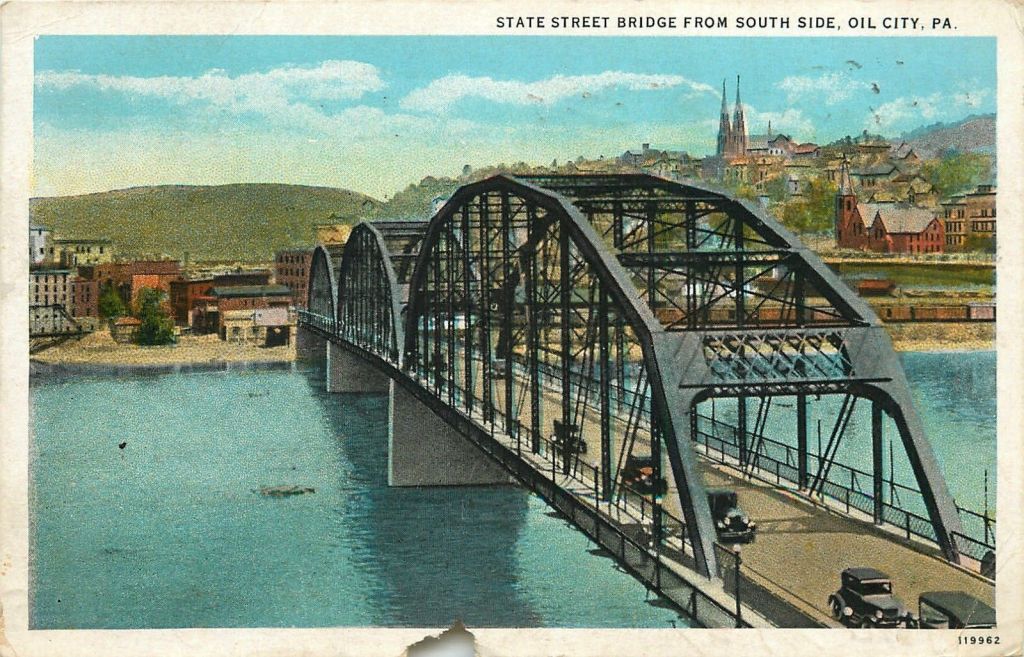
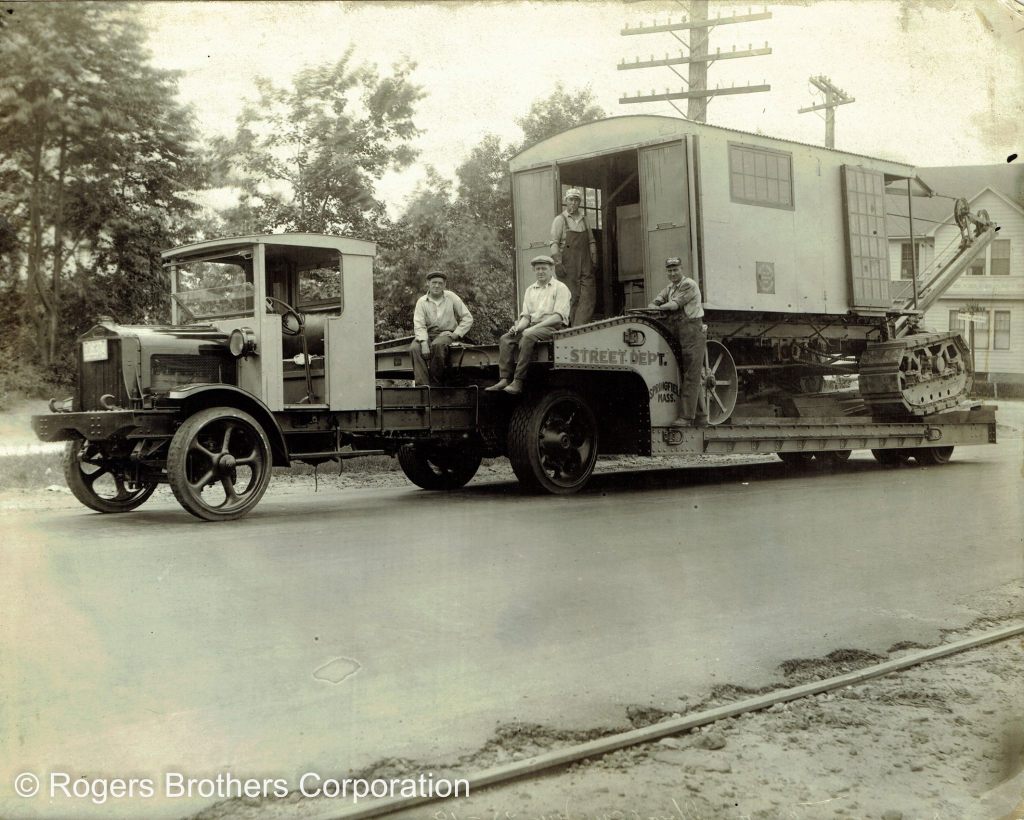
Upon completion of the Oil City bridge in 1912 and in order to recoup their losses caused by a $50,000 fire at the factory, the company engaged in rebuilding steel gondolas for the Bessemer & Lake Erie Railroad. This contract was completed in 1914 and in that same year, the Rogers Brothers offered their first commercial trailer to the public. This venture met with immediate success and soon hundreds of two-wheel, 1 ton capacity trailers were finding their way into an ever-expanding market.

In 1917 when America entered World War I, the Rogers Brothers were awared a contract for 60 trailers for the Quartermaster Corps. These were 5 ton , 2 wheel trailers used to haul miscellaneous equipment. This was followed by other war contracts and at their peak of production, 75 frames were being produced every 24 hours.

In 1921, the first large low bed trailer was produced for the Riverside Light & Power Co., Riverside, CA. It was of 40 ton capacity and had steel tired wheels. In 1923, solid rubber tires were used and the arch goose-neck first made its appearance.

In 1925, the company was incorporated under the name of Rogers Brothers and Charles Rogers became its first president. The company suffered losses during the stock market crash of 1929 but continued, nevertheless, to maintain its leadership in the low bed heavy duty trailer field. In 1932, pneumatic tires were used for the first time.

In 1935, Charles Rogers was fatally injured in an automobile accident, and Louis Rogers became president.

In 1936, welded frames were substituted for riveted frames and low alloy tensile structural sections replaced carbon beams as main carrying members.

With its background of pioneering, it is not surprising that Rogers Brothers received the first military contract in World War II. In cooperation with the War Department, Rogers Brothers developed the 45 ton tank transporter and tank retriever trailer. Plant facilities were expanded by 125% and production started in the fall of 1941. By July, 1942, operating three shifts with a force of 480 men, ten trailers were produced every 24 hours. For this achievement, the company was awarded the Army-Navy E Flag.
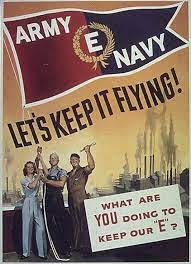
This was the formal ceremony for John Deere. Rogers Brothers wanted to keep it low key.


“E” was for Excellence in Production

Rogers Brothers filled many other military contracts for the United States, England, and Canada. Including both military and civilian models, approximately 24,000 trailers have been produced since the company was started. The largest trailer ever built was designed for the Manhattan Project. It carried a load of 300 tons on 64 pneumatic tires over 30 miles of desert sand. It was 18 feet wide and 40 feet long. (The Manhattan Project was the code name for the American-led effort to develop a functional atomic weapon during World War II. … The Manhattan Project was started in response to fears that German scientists had been working on a weapon using nuclear technology since the 1930s—and that Adolf Hitler was prepared to use it.)

Although a great percentage of Rogers Brothers productive capacity for the past several years has been taken up with war work, the company has continued to improve its commercial models and to expand its plant facilities. Today, the plant covers 85,000 square feet and employs approximately 100 people. It is noteworthy that since the company was formed, not a single day has been lost as a result of a labor dispute.
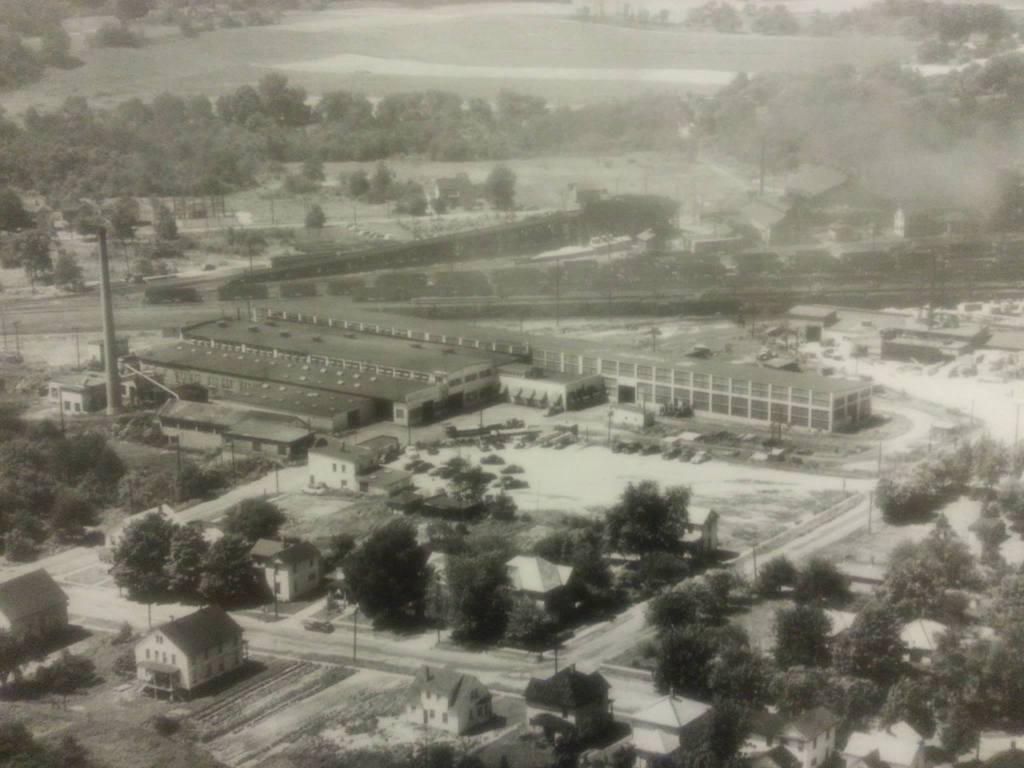
The Roger’s Brothers Facility 1949
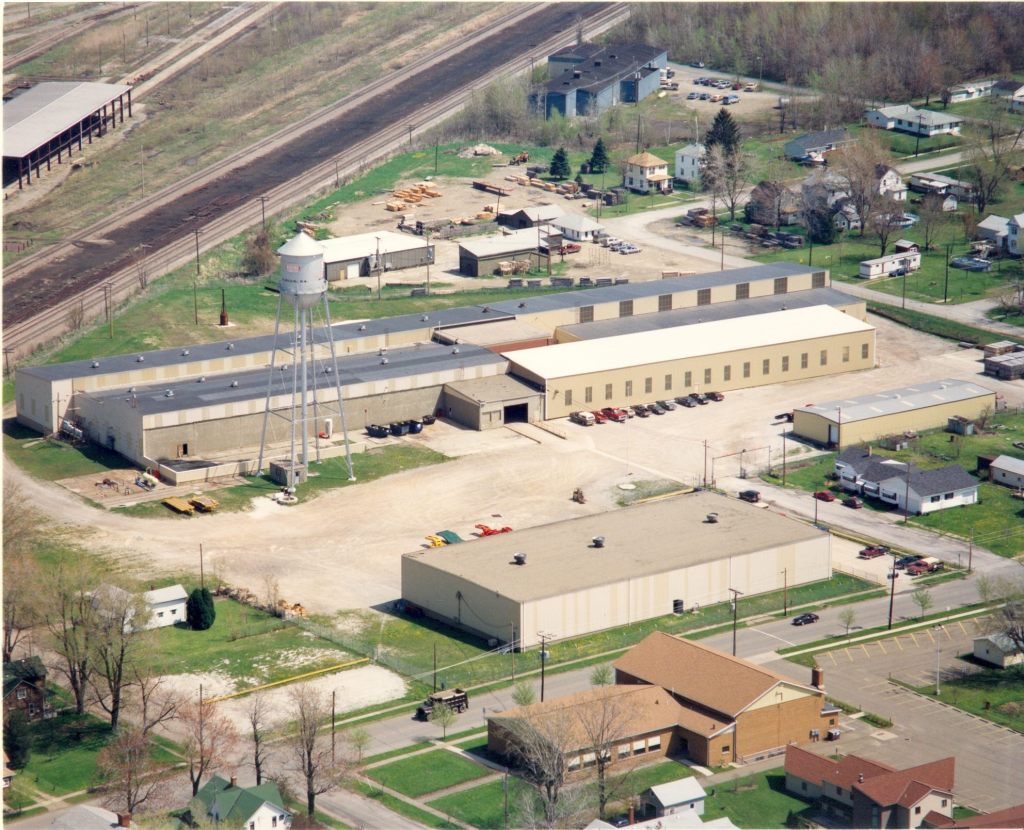
The Rogers Brothers Facility 1990

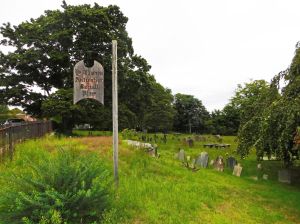
11 June 2020: Rogers Family in New London’s Old Burial Ground, Ye Townes Antientest Burial Place

Thank you for this great material!

jgeoghan's avatarWells Family Genealogy

Here’s another post cleaning out my backlog of accumulated genealogical material. This is a neat article that appeared in the New London County Historical Society Newsletter in the March 2014 issue. As a member of the NLHS, I received a copy in the mail. As a side note, they are a wonderful society to belong to, with great functions and newsletters. I highly recommend a stop by the Shaw Mansion on your next trip to NL.

The article here deals with the Rogers family buried in New London, though not my direct line ancestors, I enjoyed the article very much.  Here’s a link to the cemetery in question on FindAGrave.com: https://www.findagrave.com/cemetery/1976226/ancient-cemetery

The James Rogers first mentioned below, who came to New London between 1656 and 1660, was James Rogers Sr. (1615-1687) husband of Elizabeth Rowland. The Author is indeed correct that keeping track of the many Rogers’ with the same…

View original post 1,725 more words

The Will of John Rogers Jr of New London, CT (1674-1753)

This is an amazing Find! Kudos to Jennifer Geoghan who was able to do this trip and explain the Roger’s Will!

jgeoghan's avatarWells Family Genealogy

So it’s been like a year and a half since I went on my Genealogy Road Trip and I’m just now getting to some of the cool things I found. What can I say, I was in the middle of writing my novels. Now that I’m half way done publishing them, I’m trying to get through some of my backlog of work.  Plus I got back into my study of the Rogers family since they figure so prominently in my third Novel (The Blood That Binds, The Purity of Blood Vol III available on amazon.com)

This week I’ve been working on the handwritten copy of the will of John Rogers Jr (1674-1753, husband of both Bathsheba Smith and Elizabeth Dodge) that I photographed while I was up at the New London County Historical Society. This copy is located in the Shaw Mansion where the Society’s little library is located. I…

View original post 3,235 more words

The Rogers Family

There is extensive research done on my Mother’s side of the Family, the Rogers. I would have to say that the most recent (within the past 100 years) was the creation of the Rogers Brothers Trailer Company which started in Albion Pennsylvania.

The farthest written Genealogical information written starts off with “The Descendants of James Rogers”. James Rogers was born in 1615 in Dedham, England and died in 1687 in New Longdon, CT. He married Elizabeth Rowland in Stratford, CT. The notes indicate that James Rogers came to America from London, England in 1635 in on board the ship “Increase” at age 20. We will come back to this later.

My Great-Great Grandfather was Alfred Harrison Rogers the 8th Generation from James Rogers. He was married to Ellen Martha Lavery whose parents originated from Ireland. “He built a house on Ivoray Road which is south of 6N going west from Lavery’s corner toward Albion. The house is the second one on the right and now occupied by the Huya’s. The original house and barn are still there. The Huya’s bought it in 1915 and there are two sisters still living in the house, one is 87 and the other 91. The first house that was built, which was moved back, had cucumber wood on it which is supposed to be stronger than oak. A bigger house was built in front of the original house and this is where my Grandfather, Hugh L Rogers and his brothers and sisters were raised. This house still has no electricity, plumbing or a telephone. Larry and I visited the house on July 27, 1995 and talked with Miss Huya. She remembers a lot of the Rogers’ family and talked about Charlie Rogers being killed in a car accident on 6N right near the old farm. She heard the crash and that was in 1935. The house is fairly large and has a big porch but need “much” work!”. (Excerpt from Roxie’s Family notes)

Alfred Harrison’s obituary posted int he Crawford Journal, Meadville, PA on November 17, 1904 said the following: Alfred H. Rogers of Pageville, Erie County, died at his home Monday morning, at 1:30 o’clock after an illness of only two hours, with an attack of paralysis. Deceased was born January, 1840 in Erie County, in which place he resided almost all his life. He is survived by the widow, three sons and two daughters: Charles, of Crossingville, Lewis and Hugh, who live at home; Mrs. John Kearney, of Cygnet, Ohio and Evelyn, of Erie.

Mr. Rogers was a hard-working industrious man. Besides his large and well equipped farm, he and his son Lewis owned and operated the large saw mill at Pageville. Though his business was large and extensive and he was called upon to look after all the details, he found time to be obliging and always accommodated and helped all those who petitioned him.

His sudden death has shocked the community. The man who yesterday was hale, hearty, genial and sympathetic is today gone.

Seven years ago he was baptized and received into the Catholic church at Crossingville. Since that time, like most converts who embrace the faith after years of study, he was a consistent and faithful member of God’s church. Every obligation that he assumed was most conscientiously lived up to. Though he lived four miles from the church, no weather was so severe that he could not attend church on Sundays.

His good wife and family have received the heartfelt sympathy of a large circle of sorrowing friends. The funeral took place Wednesday morning at 10 o’clock from St. Phillip’s church, Crossingillve.

Age: 30

Microfilm: Roll 1339, Page 259 (Broaderbund Family ARchive #285, Ed.1, Census Index: Wester PA, Pennsylvania Cenusus (West). Erie County, 1870, Date of Import: Feb 3, 1997, Internal #1.285.1.10995.45)

The Children of Alfred and Ellen Rogers are:

Alice Jeanette (Nettie) 1865-1947, Charles A 1871-1935 , Esther 1875-1898, Evelyn 1878-1979, James Louis 1880-1958, and Hugh Lawrence Rogers 1884-1957.

James Louis Rogers was my Great Grandfather. (9th Generation from James Rogers)